Cleaning guide · Aledo, TX
Post-Renovation Cleaning: Construction Dust, Lead-Safe Rules and What to Clean First
By Aledo House Cleaning · Updated · 12 min read
The short answer
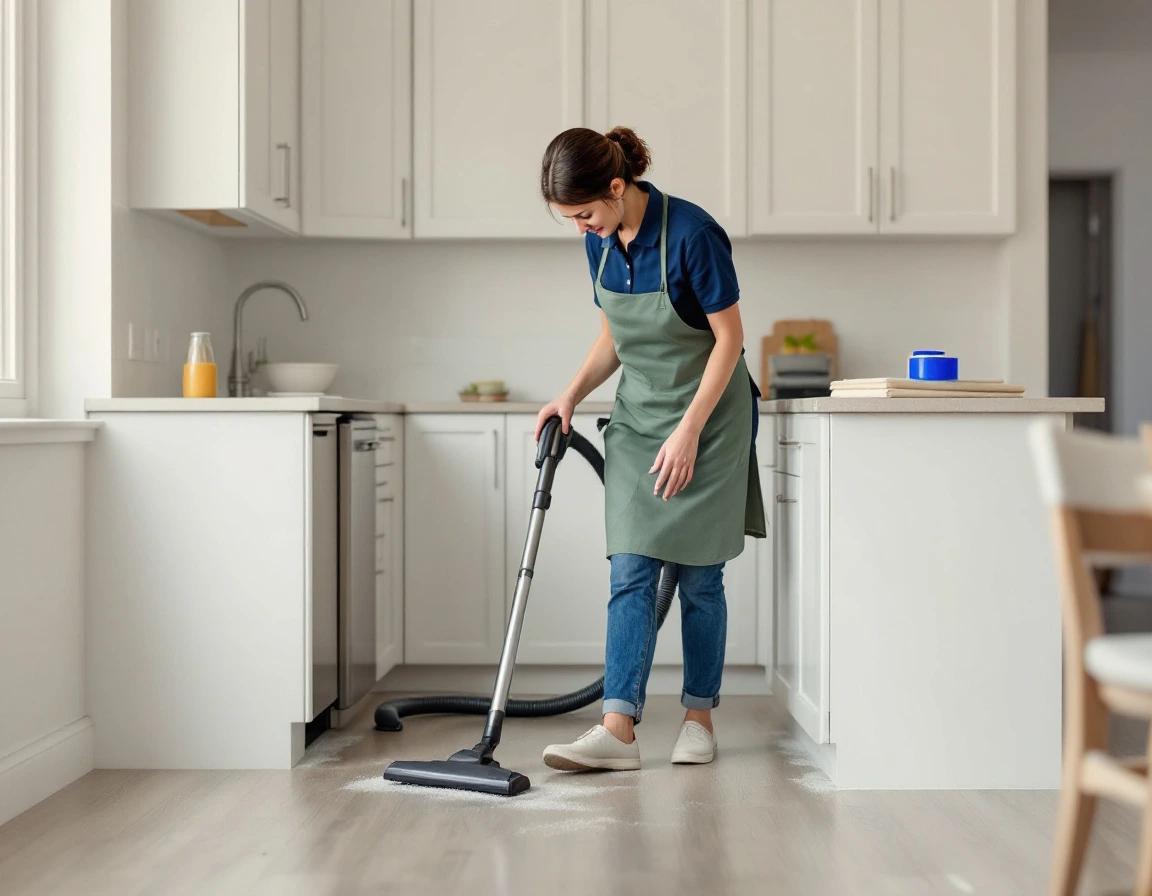
After a remodel, clean in two stages. First, the contractor finishes their own cleanup; in a home built before 1978, if the work disturbed painted surfaces, the firm doing it must be EPA lead-safe certified and must clean up and verify the work area before you move back in. Then a detail clean removes the fine dust that settles everywhere else: from the top of the room down, inside cabinets and closets, on every ledge and vent cover, and floors last. Keep the heating and cooling system off with the registers sealed until the dust is cleaned up, as EPA advises.
Two cleanups, two different jobs
Every remodel ends with two cleanups that are easy to confuse. The contractor’s cleanup removes debris, packaging and the bulk of the dust from the work area. The detail clean comes afterward, once the trades are finished, and removes the fine dust that has drifted into every room, cabinet and vent. A cleaning company does the second job, not the first.
Book the detail clean after the last trade visit, including paint touch-ups and punch-list repairs. Sanding and drywall patching put fresh dust back on everything.
Homes built before 1978: the lead-safe rule
Lead-based paint was common in homes built before 1978, and sanding, scraping, demolition and window replacement can turn it into dust. EPA’s Renovation, Repair and Painting (RRP) rule requires anyone paid to do work that disturbs painted surfaces in homes, child-care facilities and preschools built before 1978 to be certified in lead-safe work practices, sole proprietors included. In Texas, EPA runs the program itself, as the Texas Department of State Health Services confirms.
Under EPA’s work practices, a certified firm must give you EPA’s Renovate Right pamphlet before work starts, contain the work area, and finish with a thorough cleanup followed by a verification procedure. EPA’s Renovate Right pamphlet describes it: HEPA-vacuuming all surfaces, then wet wiping and wet mopping, and finally wiping surfaces with disposable cloths that are compared against an EPA cleaning verification card.
| Task | Who does it | Notes |
|---|---|---|
| Containment, debris removal, lead-safe cleanup and cleaning verification (pre-1978 homes, painted surfaces disturbed) | The EPA-certified renovation firm | Required by the RRP rule before the work area is reopened |
| General construction cleanup (any home) | Your contractor | Debris, packaging, bulk dust; check what your contract includes |
| Detail clean of the whole home | A cleaning company | After the trades finish: dust on every surface, inside cabinets, vents, ledges, floors |
| Duct cleaning, if needed | An HVAC or duct-cleaning contractor | Not part of house cleaning |
The rule has limits. EPA’s contractor guidance excludes homes built in 1978 or later and minor jobs that disturb six square feet or less of paint per room inside, or 20 square feet or less outside, although window replacement and demolition are always covered. If you are not sure whether your project qualifies, ask your contractor for their EPA firm certification before work begins.
Book the detail clean after your remodel
Protect the heating and cooling system
Dust pulled into the return air spreads through the whole house and keeps coming back out of the vents for weeks. EPA’s guidance on air ducts is direct: during dusty work, seal off the supply and return registers and do not operate the heating and cooling system until after cleaning up the dust. The same page recommends a HEPA vacuum, or the highest-efficiency filter bags your vacuum takes.
- Ask the contractor to seal registers in and near the work area before demolition starts.
- Keep the system off in the work area until the dust is cleaned up, as far as Texas weather allows.
- Replace the HVAC filter once the work and the cleanup are done.
- Ask an HVAC contractor about the ducts if dust was drawn into the system.
The order for a detail clean after renovation
- Vacuum before you wipe. Dry dust smears into paste when it gets wet. HEPA-vacuum ledges, sills, tracks and floors first.
- Top of the room first: ceiling fans, light fixtures, vent covers, crown molding and the tops of doors and cabinets.
- Walls and trim: dust walls with a dry microfiber mop or cloth, then wipe trim, door frames and switch plates.
- Inside everything: cabinets, drawers, closets, shelves and appliance interiors, where dust settles out of sight.
- Windows and glass: sills, tracks, frames and interior glass.
- Bathrooms and kitchens: fixtures, counters, tile and grout, with paint flecks and adhesive residue lifted carefully.
- Floors last, vacuumed and then damp-mopped with the right product for each floor type.
Microfiber cloths and mops trap fine dust instead of pushing it around. Change and rinse them often; a cloth loaded with drywall dust only spreads it.
What to expect after common projects
Kitchen remodel
Dust settles inside every new and existing cabinet and drawer, on top of upper cabinets, in the range hood and on appliance interiors. Expect adhesive residue on new counters and stickers or film on appliances.
Bathroom remodel
Grout haze on new tile, paint and caulk smears on glass and fixtures, and fine dust in the exhaust fan. New grout and caulk need their cure time before heavy scrubbing; follow the installer’s instructions.
New flooring
Sanding and cutting send fine dust into every room on the same level, not just the one being floored. Baseboards, door tops and vents in nearby rooms need the same detail as the work area.
Interior painting
Less dust, but paint flecks on floors, switch plates and hardware, and tape residue on trim. Let paint cure before wiping walls.
Questions to ask your contractor before work starts
- Is the home built before 1978, and is your firm EPA lead-safe certified?
- How will you contain dust, and will you seal the supply and return registers?
- What cleanup is included at the end of the job, and what is left for me?
- Will you replace the HVAC filter when the work is done?
- When will the last trade visit be, so I can schedule the final clean after it?
Keeping dust down while the work is going on
The less dust escapes the work area, the shorter the final clean. A few habits help, most of them agreed with your contractor before work starts:
- Keep doors to the work area closed, or ask for plastic sheeting over open doorways.
- Put walk-off mats where workers enter and leave, and keep a separate entry for the household if you can.
- Move or cover furniture, rugs and electronics in nearby rooms.
- Empty and cover cabinets near the work; dust gets through cabinet doors.
- Vacuum adjoining rooms with a HEPA vacuum rather than sweeping, which puts fine dust back in the air.
The first weeks after the clean
Fine dust keeps settling out of the air and the ductwork for a while after a big project, so a second, lighter dusting a week or two after the detail clean is normal. Check the HVAC filter again after a few weeks of the system running, and wipe vent covers if they gray quickly. A recurring cleaning schedule picks up the settling dust without a second deep clean.
New surfaces need gentle products
Fresh paint, new stone and new floor finishes are at their most delicate in the first weeks. Wipe new paint gently and only once it has cured; clean new stone with pH-neutral products; and clean new hardwood dry before damp. Our guides to hardwood floors, granite, marble and quartz and tile and grout cover each surface.
Remodels in Aledo and West Fort Worth
The post-war neighborhoods of West Fort Worth, such as Ridglea and Tanglewood, and the older streets of Benbrook include many homes built before 1978, which is exactly where the lead-safe rule applies; newer homes in Aledo and Walsh see remodels and additions too. We are a cleaning company, not a renovation firm: we do the deep cleaning after your contractor has finished their work, including any required lead-safe cleanup and verification. If you are moving into a just-finished home, our move-in cleaning and new construction checklist cover the same ground.
Frequently asked questions
Does the lead-safe rule apply to my remodel?
EPA’s Renovation, Repair and Painting rule applies to paid work that disturbs painted surfaces in homes built before 1978, with exceptions for small jobs (six square feet or less of paint per room inside, 20 square feet or less outside). Window replacement and demolition are always covered. Ask your contractor for their EPA firm certification.
Who runs the lead-safe renovation program in Texas?
EPA administers the Renovation, Repair and Painting program in Texas. The Texas Department of State Health Services separately certifies lead inspections, risk assessments and abatement.
Should I run the air conditioning during a remodel?
EPA advises sealing off the supply and return registers and not operating the heating and cooling system until the dust has been cleaned up. Replace the filter afterward.
How long after a remodel should I book a cleaning?
After the last trade visit, including paint touch-ups and punch-list repairs, and after the contractor’s own cleanup is complete. Cleaning before then usually means cleaning twice.
Can a cleaning company do the lead-safe cleanup?
The cleanup and cleaning verification required by the lead-safe rule are the certified renovation firm’s responsibility. A cleaning company does the detail clean of the rest of the home once that work is done.
What equipment works best for construction dust?
A HEPA vacuum first, then barely damp microfiber cloths and mops. EPA recommends a HEPA vacuum, or the highest-efficiency filter bags your vacuum can take, because ordinary vacuums can put fine dust back into the air.
Sources
Outside pages this page relies on, checked when it was last updated.
- Lead Renovation, Repair and Painting Program · U.S. Environmental Protection Agency, 2026-06-17
- Renovation, Repair and Painting Program: Contractors · U.S. Environmental Protection Agency, 2026-03-31
- Renovation, Repair and Painting Program: Work Practices · U.S. Environmental Protection Agency, 2025-12-09
- Renovate Right: Important Lead Hazard Information for Families, Child Care Providers and Schools · U.S. Environmental Protection Agency, 2026-06-15
- Environmental Lead Program · Texas Department of State Health Services
- Should You Have the Air Ducts in Your Home Cleaned? · U.S. Environmental Protection Agency, 2026-02-19
Request a quote
Book the detail clean after your remodel
Tell us about the project, the rooms involved and when the trades finish. We reply with a clear price and available dates.
What happens next
- 1. Send your name, phone, ZIP and the type of cleaning. It takes under a minute.
- 2. We reply with a clear price and available dates before anything is scheduled.
- 3. Approve the quote and we book your visit. No contracts for recurring service.
Rather talk? Call (682) 841-6708 or text us, Mon–Sat, 8 AM–6 PM.
More cleaning guides
7 min read
How Much Does House Cleaning Cost in Aledo, TX?
The price of a cleaning in Aledo depends on a handful of factors, from bathrooms and square footage to how often you book. Here is what moves the number and how to get an accurate quote.
Read the guide
6 min read
Weekly vs. Biweekly House Cleaning in Aledo
Biweekly suits most Aledo family homes, but weekly is worth it for some households. Here is how to decide, and when monthly makes sense.
Read the guide