Cleaning guide · Aledo, TX
Tile and Grout Cleaning: What Is Safe for Porcelain, Ceramic and Natural Stone
By Aledo House Cleaning · Updated · 9 min read
The short answer
Clean glazed ceramic and porcelain tile with a neutral tile cleaner or a mildly alkaline detergent, rinse, and dry. Avoid acids, including vinegar, on tile and cement grout: the Tile Council of North America says acids dissolve the cement in grout and are not generally recommended for tile. Use only neutral, non-acidic cleaners on natural stone tile. Seal cement grout if your installer recommends it, and test or reseal it about once a year; epoxy grout needs no sealer.
Know what your tile and grout are made of
Glazed ceramic and porcelain tile are dense and easy to clean. Unglazed porcelain and natural stone tile, such as travertine, marble, slate and limestone, are more porous, and stone reacts to acidic cleaners. Grout is usually cement-based and porous, which is why it darkens first; some newer installations use epoxy or other grouts that resist stains far better.
| Surface | Routine cleaning | Avoid |
|---|---|---|
| Glazed ceramic and porcelain | A neutral tile cleaner or mildly alkaline detergent, then rinse | Acids; sprays or coatings on glazed floor tile |
| Natural stone tile (travertine, marble, limestone, slate) | A neutral stone cleaner or mild dish soap and warm water | Vinegar, lemon and other acids; scouring powders |
| Cement grout | A neutral or mildly alkaline cleaner made for grout, soft nylon brush, rinse | Acids, oil- or wax-based cleaners; ammonia and bleach on sealed grout |
| Epoxy grout | The same gentle cleaners as the tile | Harsh abrasives; it does not need sealing |
Routine cleaning for tile floors and showers
The Tile Council of North America suggests cleaning bathroom tile and grout weekly with a neutral cleaner made specifically for grout and tile or a mildly alkaline detergent, and keeping strong cleaners for occasional use only.
- Remove grit first: sweep or vacuum floors before mopping.
- Use a cleaner suited to the tile, in the dilution on the label; pH-neutral for natural stone.
- Mop or wipe with a clean, barely wet mop or cloth, changing the water when it clouds.
- Rinse so no cleaner film is left to attract dirt.
- Dry showers and floors to prevent water spots and mildew.
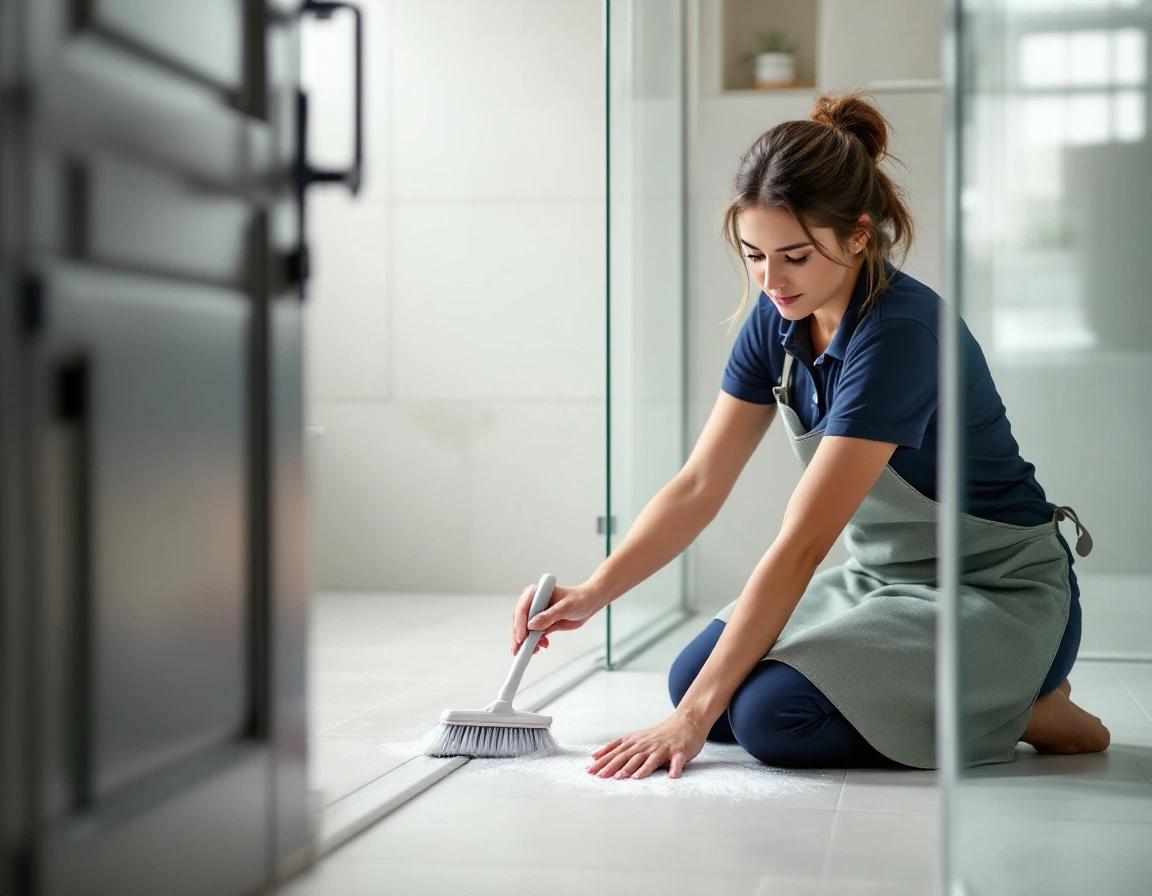
Showers and tile floors scrubbed clean
Why grout darkens, and how to clean it
Cement grout is porous. Soil, soap and body oils settle into it, and mopping with dirty water or too much soap leaves a film that holds more dirt. A soft nylon brush, a cleaner suited to the tile, and a thorough rinse do most of the work. Metal brushes and harsh scouring can wear grout away and scratch tile.
Two rules from the tile industry matter most. First, avoid acids: the Tile Council explains that the cement in grout dissolves in acid, so it is better to clean grout with an alkaline cleaner, and it warns against oil- or wax-based cleaners. Second, seal cement grout: the Council recommends sealing it, while epoxy grout is virtually as stain-proof as the tile itself. Its tile article suggests grout sealers may be reapplied once a year, and a major grout maker, Custom Building Products, recommends periodic testing of sealed surfaces with water and avoiding cleaners that contain ammonia, acids or bleach on sealed grout.
Grout lines that stay dark in the same place in a shower, or crumble when brushed, may be letting water behind the tile. That is a repair for a tile contractor, not a cleaning problem.
Natural stone tile needs different products
Travertine, marble and limestone tiles are calcareous stone, and they react to acids the same way a marble counter does. The Natural Stone Institute says products containing lemon, vinegar or other acids may dull or etch calcareous stones, and recommends a neutral cleaner, stone soap or a mild dishwashing detergent and warm water. Its countertop bulletin adds that vinegar should never be used on calcareous stones. On stone floors, dust-mop often: grit is abrasive.
Our granite, marble and quartz guide explains the difference between an etch and a stain, which applies to stone floors and shower walls as much as counters.
Showers: soap scum, hard water and mildew
Showers combine all three problems: soap scum, hard-water film and mildew. A daily squeegee and good ventilation prevent most of it. For build-up, use a cleaner suited to the tile and grout, never an acidic one on natural stone, and rinse and dry the enclosure afterward. For mildew in grout and caulk, see our guide to bathroom mold and mildew.
A weekly tile and grout routine
- Remove loose dirt. Sweep or vacuum tile floors; rinse shower walls with warm water.
- Apply a neutral or mildly alkaline tile cleaner in the dilution on the label.
- Scrub grout lines with a soft nylon brush, working in small sections.
- Rinse with clean water. Leftover cleaner leaves a film that attracts dirt.
- Dry. Squeegee shower walls and dry floors so water does not sit in the grout.
Change mop water as soon as it looks cloudy. Mopping with dirty water is the most common reason grout darkens again a day after it is cleaned. A second bucket of clean rinse water beside the cleaning bucket makes it easy to keep the mop clean.
Kitchen backsplashes and tile floors
Kitchen tile collects grease rather than soap scum. Wipe the backsplash behind the range weekly with warm water and a neutral or mildly alkaline cleaner; grease left for months bonds to grout and takes far more scrubbing. On kitchen floors, sweep daily in busy homes, since grit wears glazes and grout, and mop with the same gentle cleaner.
When grout needs more than cleaning
Cleaning cannot fix grout that is cracked, crumbling or missing, or grout stained deep in its pores. Those need a tile contractor to repair or regrout, and that is the moment to consider the grout type. The Tile Council notes that epoxy grout is virtually as stain proof as the tile, which makes it worth discussing for busy showers and kitchen floors. Caulk, not grout, belongs where tile meets the tub, a change of plane or a different material; if that joint is cracked, recaulk it.
For mildew on grout and caulk, see our guide to bathroom mold and mildew.
Glazed tile: clean it, do not coat it
Glazed ceramic and porcelain already have a hard, finished surface. The Tile Council advises that for glazed floor tile it is not a good idea to spray anything on the tile as a coating, and it warns against oil- or wax-based cleaners on grout. Products that promise shine or a protective film tend to leave a slippery, dirt-catching layer instead. Clean glazed tile, rinse it, and dry it; that is all the finish needs.
Textured and matte porcelain, common in newer showers and on outdoor-to-indoor floors, holds dirt in its surface texture. A soft nylon brush with the same neutral or mildly alkaline cleaner gets into the texture without scratching it.
Tile in Aledo-area homes
Large-format porcelain, travertine and natural stone showers are common in homes across Aledo, Hudson Oaks and the Annettas, and hard water is the usual reason shower tile looks dull. Our teams scrub tile and grout on every standard house cleaning, with pH-neutral products on natural stone; a deep cleaning adds detailed grout work and hard-water removal where possible. For a regular schedule that keeps grout from darkening, see recurring cleaning.
Frequently asked questions
What is the best way to clean grout?
A soft nylon brush, a cleaner suited to your tile, and a thorough rinse with clean water. Avoid metal brushes, which wear grout away, and use pH-neutral products if the tile is natural stone.
Should grout be sealed?
Cement grout, usually yes. The Tile Council of North America recommends sealing cement grout, notes that epoxy grout is virtually as stain-proof as the tile, and suggests grout sealers may be reapplied about once a year. Test sealed grout with a few drops of water and follow your installer’s or grout maker’s instructions.
Can I use vinegar or bleach on tile and grout?
Not as a routine. The Tile Council of North America says acids are not generally recommended for cleaning tile and that the cement in grout dissolves in acid; Custom Building Products advises against ammonia, acids and bleach on sealed grout. Use a neutral or mildly alkaline cleaner made for tile and grout.
Why does my grout get dark again so fast?
Usually because dirty mop water or too much soap leaves a film in the porous grout that holds dirt. Rinse after cleaning, change mop water often, and consider sealing cement grout if your tile maker recommends it.
Is epoxy grout better than cement grout?
For stain resistance, yes. The Tile Council of North America notes that epoxy grout is virtually as stain proof as the tile and does not need sealing, while cement grout should be sealed. Epoxy grout is harder to install, so it is a decision to make with your tile contractor.
Do you clean tile and grout during a house cleaning?
Yes. Tile and grout in bathrooms and kitchens are scrubbed on every standard cleaning, and a deep cleaning adds detailed grout work. Re-grouting and sealing are jobs for a tile contractor.
Sources
Outside pages this page relies on, checked when it was last updated.
- Cleaning Grout · Tile Council of North America
- Bathroom Tile and Grout: A Few Tips on Keeping Them Clean · Tile Council of North America, 2005
- TileLab Grout Sealer (TDS-147) · Custom Building Products, 2023-03-22
- Care & Cleaning of Natural Stone · Natural Stone Institute
- Natural Stone Countertop Sanitation · Natural Stone Institute
Request a quote
Showers and tile floors scrubbed clean
Tell us about your home and its tile and stone. We reply with a clear price and available dates.
What happens next
- 1. Send your name, phone, ZIP and the type of cleaning. It takes under a minute.
- 2. We reply with a clear price and available dates before anything is scheduled.
- 3. Approve the quote and we book your visit. No contracts for recurring service.
Rather talk? Call (682) 841-6708 or text us, Mon–Sat, 8 AM–6 PM.
More cleaning guides

7 min read
How Much Does House Cleaning Cost in Aledo, TX?
The price of a cleaning in Aledo depends on a handful of factors, from bathrooms and square footage to how often you book. Here is what moves the number and how to get an accurate quote.
Read the guide
6 min read
Weekly vs. Biweekly House Cleaning in Aledo
Biweekly suits most Aledo family homes, but weekly is worth it for some households. Here is how to decide, and when monthly makes sense.
Read the guide