Cleaning guide · Aledo, TX
How to Clean Granite, Marble and Quartz Countertops (and What Ruins Them)
By Aledo House Cleaning · Updated · 10 min read
The short answer
Clean all three with a soft cloth and a mild, non-acidic cleaner: a neutral stone cleaner or a little mild dish soap in warm water for granite and marble, and warm water with a mild detergent for quartz. Never use vinegar, lemon or other acids on marble, limestone or travertine, because they etch the polish. Granite resists most household acids; quartz does not need sealing; and hot pans belong on trivets for every counter.
Three surfaces that look alike and behave differently
Walk through a new kitchen in Walsh or a remodeled one in Willow Park and the island is likely to be one of three materials. Granite is a hard, igneous natural stone. Marble (and its cousins limestone and travertine) is a calcareous natural stone: it is made largely of calcium carbonate, which reacts with acids. Quartz is engineered stone, crushed quartz bound with resins and pigments in a factory.
That difference in what they are made of explains almost everything about how to clean them.
| Granite | Marble, limestone, travertine | Quartz (engineered) | |
|---|---|---|---|
| Made of | Natural igneous stone | Natural calcareous stone (calcium carbonate) | Quartz with resin binders |
| Acids (vinegar, lemon, wine) | Resists most household acids | Etch the surface, leaving dull marks | Use high- or low-pH products with caution (maker’s list) |
| Daily cleaning | Neutral stone cleaner, stone soap or mild dish soap and warm water | The same, never acidic cleaners | Warm water with a mild detergent |
| Sealing | Ask your supplier how often | Makes it stain resistant, not etch-proof | Not needed (nonporous) |
| Heat | Use trivets as a habit | Use trivets | Always use trivets and hot pads |
Daily cleaning for every stone counter
The Natural Stone Institute’s advice for natural stone is simple: clean with a neutral cleaner, stone soap, or a mild liquid dishwashing detergent and warm water. It warns that scouring powders and creams often contain abrasives that can scratch some stones. For quartz, Caesarstone recommends a soft cloth or a non-abrasive scourer with warm water and a mild detergent.
- Clear crumbs first with a dry microfiber cloth or a soft brush, so grit is not dragged across the surface.
- Spray a pH-neutral cleaner made for stone, or use warm water with a drop of mild dish soap.
- Wipe with a damp microfiber cloth, then rinse the cloth and wipe again so no soap film is left.
- Dry and buff with a clean, dry microfiber cloth to prevent water spots.
Aledo-area water is hard, and drips left to dry around the sink leave mineral rings on stone and quartz alike. Drying the counter beside the faucet each night prevents most of them.
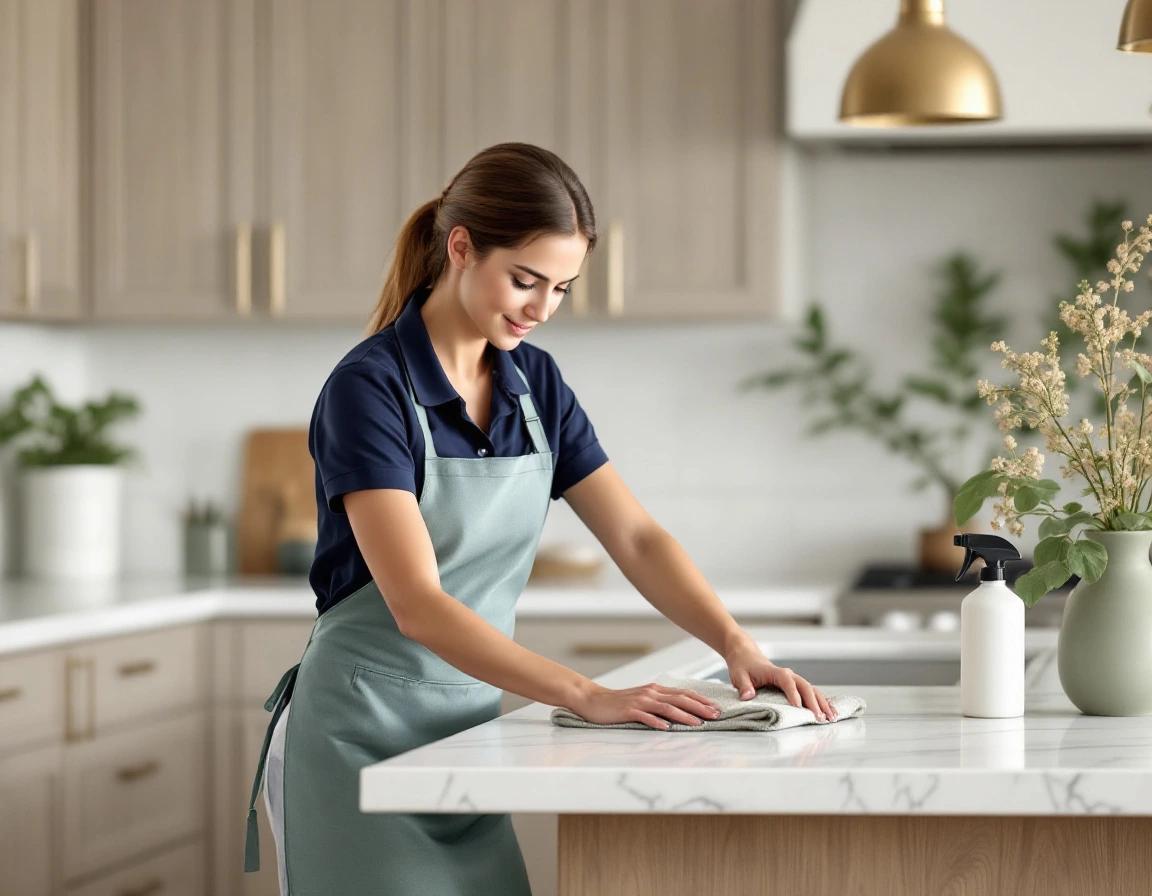
Counters cleaned with the right product for the stone
Marble: etching is not a stain
Marble, limestone and travertine are calcareous stones, built largely on calcium carbonate. The Natural Stone Institute says products containing lemon, vinegar or other acids may dull or etch calcareous stones, and its countertop bulletin is blunter: vinegar should never be used on calcareous stones such as marble, limestone or travertine. Granite is different; the Institute’s consumer site notes that granite is not sensitive to most common household acids.
An etch is a dull, slightly rough spot where an acid has eaten into the polish. A stain is a dark or colored mark where a liquid has soaked into the stone. Sealers help with stains, but the Institute’s marble guidance is clear that sealing does nothing to protect against etching, no matter how much sealer is used. On a polished marble island, lemon juice, vinegar, tomato sauce, wine and many bathroom and “natural” cleaners can etch quickly.
- Set glasses and cut fruit on boards or coasters, not straight on the marble.
- Wipe acidic spills right away with water, then dry.
- Never use vinegar, lemon, or cleaners that are not labeled safe for marble.
- Have deep etching professionally honed and polished rather than scrubbing at it.
Sealing granite and marble
Sealing helps natural stone resist stains. The Natural Stone Institute notes that sealing does not make the stone stain proof, rather it makes the stone more stain resistant, and it does not give a single schedule: it says to consult your supplier or the sealer’s maker about the type of sealer and how often to apply it.
A quick check many homeowners use: put a few drops of water on the stone and wait several minutes. If it darkens under the water, the surface is absorbing liquid, and it is worth asking your fabricator or the sealer maker whether it is time to reseal.
Quartz: easy care, with two limits
Quartz is engineered to be low-maintenance. Caesarstone describes its surfaces as durable and nonporous, so they do not need sealing. Its care page sets two limits worth knowing:
- Heat: always put hot cookware on a trivet or hot pad, as Caesarstone directs.
- Harsh chemicals: Caesarstone lists oven and grill cleaners, dishwasher detergent, floor strippers, oil soaps and paint removers among the products to avoid, and says to use high- or low-pH chemicals with caution.
- Abrasives: a non-abrasive scourer for dried food; never steel wool.
Common marks and what to do about them
- Water rings and mineral spots: wipe with a damp cloth and dry; on stone, use a stone-safe cleaner, never vinegar.
- Oil and grease on granite or marble: clean promptly with a pH-neutral cleaner; stubborn oil stains in stone may need a poultice made for stone.
- Dried food on quartz: soften with warm soapy water and lift with a plastic scraper.
- Etching on marble: prevent it; repair it with professional honing and polishing.
Stone floors, vanities and backsplashes
The same rules apply wherever stone appears in a home, with a few additions:
- Stone floors: the Natural Stone Institute recommends dust-mopping interior floors frequently with a clean, untreated dry dust mop, because grit is abrasive. Mats at the door help.
- Bathroom vanities: toothpaste, hair products and many bathroom cleaners are acidic or abrasive. Wipe spills quickly and clean marble vanities with a neutral stone cleaner only.
- Backsplashes: a damp cloth and neutral cleaner; grease behind the range comes off more easily if it is wiped weekly.
- Shower walls and benches: squeegee after use; hard-water film on natural stone needs a stone-safe product, never an acidic descaler.
Heat, knives and everyday habits
Granite is tough: the Natural Stone Institute says it is typically heat resistant up to about 250°C (480°F), but it still recommends avoiding localized heat and using trivets or mats on all natural stone. Quartz needs them every time. Cutting directly on any counter dulls knives and can scratch polished stone, so use a board.
- Daily: wipe crumbs, clean with a neutral cleaner, dry around the sink.
- Weekly: a more thorough wipe of the whole surface, including behind small appliances.
- Yearly, for natural stone: check whether it is still repelling water, and ask your fabricator about resealing.
Stone and quartz in Aledo-area homes
Quartz islands are common in newer Walsh Ranch and Aledo kitchens; granite is everywhere in homes built over the last few decades; and marble appears in the primary bathrooms and kitchens of many custom homes in Hudson Oaks and the Annettas. Our teams choose products by surface on every house cleaning, with pH-neutral care for natural stone, and a deep cleaning adds detailed work around sinks, backsplashes and range hoods.
Fixtures and appliances around those counters need their own care. Our guide to cleaning stainless, brass and matte black finishes picks up from here.
Frequently asked questions
Can I use vinegar on granite or marble?
No. Vinegar is an acid. It etches marble, limestone and travertine quickly and can dull some granite finishes over time. Use a pH-neutral cleaner made for stone or mild soap and water.
Is Windex or all-purpose cleaner safe on quartz?
Check your brand’s care page first. Caesarstone recommends warm water with a mild detergent, lists products to avoid (oven and grill cleaners, dishwasher detergent, floor strippers, oil soaps, paint removers), and says to use high- or low-pH chemicals with caution. A mild detergent is the safe everyday choice.
How often should granite be sealed?
There is no single schedule. The Natural Stone Institute says to ask your supplier or the sealer maker how often to seal your stone. A few drops of water that darken the stone within several minutes are a sign it is absorbing liquid.
Can you put hot pans on quartz?
Use a trivet. Caesarstone says to always place hot cookware on trivets and hot pads, and the Natural Stone Institute recommends trivets for natural stone as well.
What is the difference between an etch and a stain on marble?
An etch is a dull spot where an acid has eaten into the polish; a stain is a colored mark where something has soaked in. Sealing helps prevent stains but does not prevent etching.
Do your cleaners know how to clean marble?
Yes. Our teams are trained on natural stone and use pH-neutral products on marble, granite and travertine. Tell us which surfaces are natural stone when you book and we will note them for every visit.
Sources
Outside pages this page relies on, checked when it was last updated.
- Care & Cleaning of Natural Stone · Natural Stone Institute
- Natural Stone Countertop Sanitation · Natural Stone Institute
- Granite · Natural Stone Institute
- How to Care For Your Granite Countertops · Natural Stone Institute (Use Natural Stone), 2018-02-26
- How to Care for Your Marble Countertops · Natural Stone Institute (Use Natural Stone), 2019-02-06
- Care and Maintain for our Fusion, Mineral & Quartz Surfaces · Caesarstone
Request a quote
Counters cleaned with the right product for the stone
Tell us about your kitchen and bathrooms and which surfaces are natural stone. We reply with a clear price and dates.
What happens next
- 1. Send your name, phone, ZIP and the type of cleaning. It takes under a minute.
- 2. We reply with a clear price and available dates before anything is scheduled.
- 3. Approve the quote and we book your visit. No contracts for recurring service.
Rather talk? Call (682) 841-6708 or text us, Mon–Sat, 8 AM–6 PM.
More cleaning guides
7 min read
How Much Does House Cleaning Cost in Aledo, TX?
The price of a cleaning in Aledo depends on a handful of factors, from bathrooms and square footage to how often you book. Here is what moves the number and how to get an accurate quote.
Read the guide
6 min read
Weekly vs. Biweekly House Cleaning in Aledo
Biweekly suits most Aledo family homes, but weekly is worth it for some households. Here is how to decide, and when monthly makes sense.
Read the guide