Cleaning guide · Aledo, TX
How to Clean Hardwood Floors Without Damaging the Finish
By Aledo House Cleaning · Updated · 10 min read
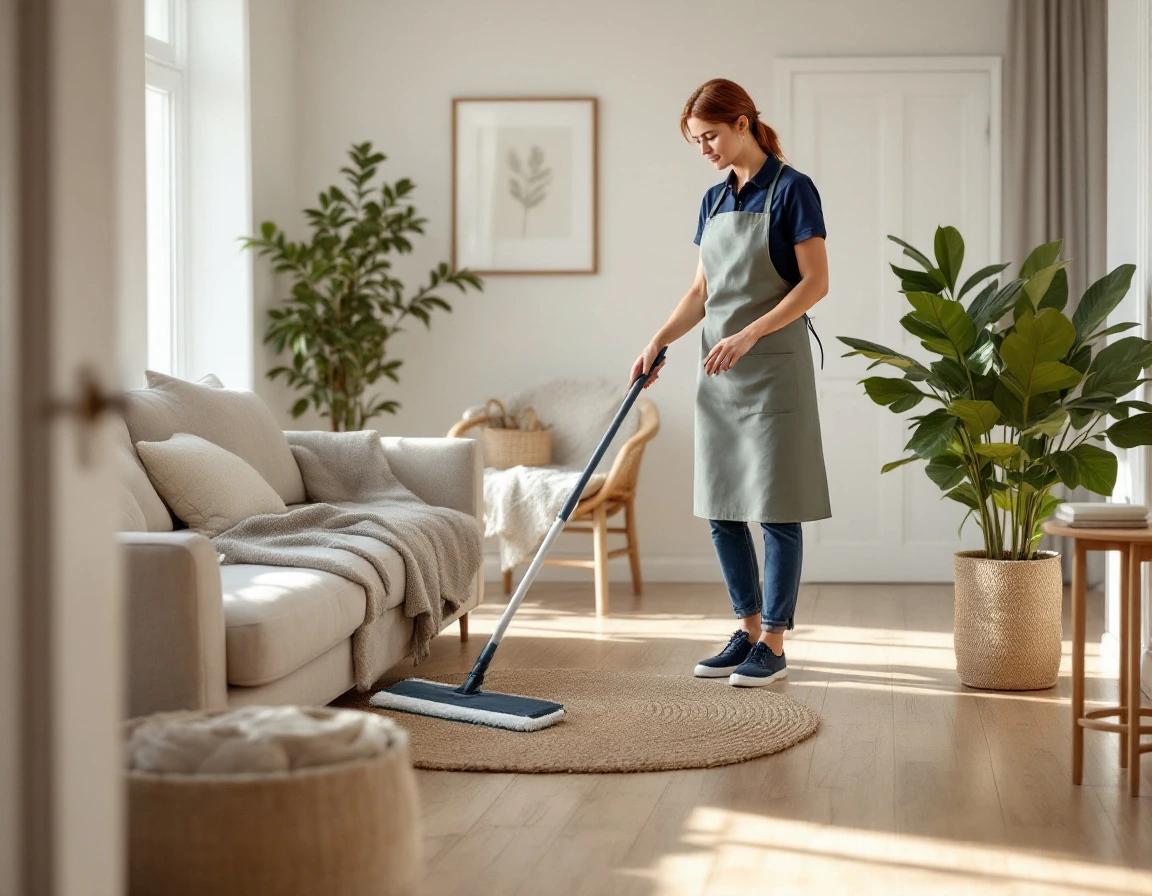
The short answer
Clean hardwood floors dry first and damp rarely. The National Wood Flooring Association’s routine is to sweep or dust-mop as needed, vacuum weekly on the bare-floor setting, and clean about monthly with a cleaner made for your floor’s finish. Never use wet mops, steam mops, vinegar, bleach, ammonia, waxes or polishes on a modern finished floor. As of November 2026, the NWFA also recommends keeping the home between 30 and 50 percent humidity and 60 to 80°F all year.
Start with the finish, not the wood
Oak, hickory and walnut all clean the same way. What changes the method is the finish on top. Most floors installed in the last few decades, including nearly every prefinished floor in new Walsh and Aledo homes, have a surface finish such as polyurethane: a protective film that sits on top of the wood. Some newer floors and many European-style wide planks use a penetrating oil or hardwax oil finish that soaks into the wood instead. Older homes, especially some of the original floors in Ridglea and Tanglewood, may still have a wax finish.
If you are not sure which you have, check the builder’s or flooring manufacturer’s care sheet first. In a new home it is often in the closing packet or on the builder’s homeowner portal. The manufacturer’s instructions always come before general advice, including ours.
| Finish | How it looks and feels | Routine cleaning | Avoid |
|---|---|---|---|
| Surface finish (polyurethane, urethane, factory prefinished) | A clear film on top; water beads on it | Dry dust-mop or vacuum, then a barely damp microfiber mop with a cleaner made for the finish | Wax, polishes, wet or steam mops, vinegar, bleach, ammonia |
| Penetrating oil or hardwax oil | A matte, natural look; the finish is in the wood | Dry methods, then the soap or cleaner the finish maker specifies | All-purpose cleaners, ammonia, anything the maker does not approve |
| Wax (older floors) | Soft sheen; a fingernail can leave a mark | Dry methods only; buffing and re-waxing on the maker’s schedule | Water-based cleaners and any damp mopping |
Everyday care: grit is the real enemy
Sand and grit act like sandpaper under shoes and chair legs, and they wear through a finish long before anything else does. That is why the most important cleaning a hardwood floor gets is the dry cleaning it gets every day or two.
The National Wood Flooring Association puts it plainly: routine cleaning involves sweeping, dust mopping, or vacuuming using the bare floor setting to remove dust and dirt. Its homeowner’s handbook suggests a rhythm: sweep or dust-mop as needed, vacuum weekly on the bare-floor setting, and clean with the appropriate wood floor cleaner monthly, using a soft-bristle broom or a dry microfiber mop.
- Dust-mop or sweep daily in busy rooms. Kitchens, entries and hallways collect the most grit.
- Vacuum with the hard-floor setting. Turn off the beater bar or use a hard-floor head so bristles do not scuff the finish.
- Put mats at every exterior door. The NWFA recommends doormats at entrances to cut the dirt and moisture brought in from outside, and rugs at doorways to stop grit being tracked across the floor.
- Use felt pads under furniture. The NWFA recommends felt protectors under furniture legs to prevent scuffs and scratches.
- Lift furniture, never drag it.
On acreage properties around Aledo and the Annettas, wind-blown dust and grit come in on boots and paws. An outside mat plus an inside mat at the mudroom door catches far more than either one alone.
Floors cleaned the right way for their finish
Damp cleaning the right way
Dry methods remove grit; a periodic damp clean removes the film of skin oils, food and footprints that dry methods leave behind. The NWFA’s handbook suggests about once a month with the right wood floor cleaner; a busy kitchen or entry may need spot cleaning in between, and a formal living room less.
- Remove all loose grit first. Damp-mopping over grit grinds it into the finish.
- Use the cleaner your floor’s maker recommends, or one made for your finish. The NWFA says it is best to use a cleaner made specifically for the finish on the floor, and that a pH-balanced cleaner helps protect it.
- Mist the mop, not the floor. A microfiber pad should be barely damp, never dripping.
- Work with the grain, a few boards at a time, toward a door so you do not walk on it.
- Dry any wet spots with a clean, dry microfiber cloth before you move on.
What never to use on hardwood
Most floor damage from cleaning comes from water and the wrong chemistry. The NWFA’s guidance is consistent across its homeowner pages: don’t use wet mops or steam mops, which damage the finish and the wood over time.
- Wet mops and steam mops. Water and heat work into seams and damage both finish and wood.
- Vinegar. The NWFA notes its acidic nature can damage the wood floor and finishes over time.
- Bleach and ammonia-based cleaners, which the NWFA says can strip the finish.
- Waxes, polishes and “restorers”. The NWFA warns they can make floors slippery and dull, and that many modern factory-finished floors should avoid waxes and oils entirely.
- Abrasive pads and scouring powders, which scratch the finish.
If a product promises to “restore shine” to a surface-finished floor, read the label carefully. Polishes and waxes applied over polyurethane can leave a slippery, cloudy build-up and make a later screen-and-recoat harder.
Humidity, gaps and cupping in North Texas
Wood moves with moisture. It swells in humid months and shrinks in dry ones, which is why boards can show small gaps in winter and slight cupping in summer.
The NWFA recommends keeping your home between 60 and 80 degrees Fahrenheit and between 30 and 50 percent humidity, year-round. Staying inside that range is the best way to limit seasonal gaps and cupping, and the NWFA also recommends floor protector pads on furniture legs.
In practice that means running the air conditioning through humid summers, watching for very dry air when the heat runs in winter, and wiping up water around sinks, refrigerators, pet bowls and entries straight away. Standing water is far more damaging than humidity swings.
Spills, pets and everyday scratches
- Spills: blot right away with a dry cloth, then a barely damp one, then dry the spot.
- Pet accidents: clean them as soon as you find them; urine left to sit can stain and damage the wood under the finish.
- Water bowls: set them on a waterproof mat.
- Scratches: surface scuffs on a urethane finish are usually in the finish, not the wood. A flooring professional can screen and recoat a worn finish without sanding to bare wood.
- Rugs: use a rug pad recommended for hardwood, so rubber backings do not discolor the finish.
Hardwood in Aledo-area homes
New construction around Walsh Ranch and Aledo often has wide-plank white oak with a factory or site-applied finish, laid through open kitchens and living areas. Older homes in West Fort Worth and Benbrook may have original oak strip floors with decades of refinishing behind them. Both reward the same habits: dry first, damp rarely, and the right cleaner for the finish.
Our teams clean hardwood with wood-safe products and barely damp microfiber on every standard house cleaning and recurring visit. A deep cleaning adds baseboards and the edges along cabinets where grit collects. If your floors need refinishing, that is a job for a wood-flooring contractor; we will tell you if we see a finish worn through.
Stone and tile need their own care. Our guides to granite, marble and quartz and tile and grout cover them.
Frequently asked questions
Can I use a steam mop on hardwood floors?
No. The National Wood Flooring Association says not to use wet mops or steam mops, which damage the finish and the wood over long periods of time. Clean dry, then with a barely damp microfiber mop and a cleaner made for your finish.
Is vinegar and water safe for hardwood floors?
The National Wood Flooring Association advises against it: vinegar is acidic and can damage the floor and its finish over time. Use a pH-balanced cleaner made for your floor’s finish instead.
How often should hardwood floors be mopped?
Dry cleaning (dust-mopping, sweeping or vacuuming) every day or two in busy rooms, and a damp clean with a barely damp microfiber mop as needed: weekly in kitchens and entries, less often in quieter rooms. Too much water is a bigger risk than too little mopping.
How do you clean engineered hardwood?
The same way as solid hardwood with the same finish. Engineered floors have a real wood top layer, and the finish on it decides the method. Follow the flooring manufacturer’s care sheet.
What humidity is best for hardwood floors?
The National Wood Flooring Association recommends keeping your home between 30 and 50 percent humidity and between 60 and 80°F year-round to keep wood floors stable.
Do you clean hardwood floors as part of a house cleaning?
Yes. Every standard, recurring and deep cleaning includes the floors, and our teams use wood-safe products and barely damp microfiber on hardwood. Tell us about any finish care instructions from your builder or flooring maker and we will follow them.
Sources
Outside pages this page relies on, checked when it was last updated.
- Maintenance · National Wood Flooring Association
- Homeowner’s Handbook to Real Wood Floors · National Wood Flooring Association
- How to Clean and Take Care of Your Wood Floors: Essential Tips for Homeowners · National Wood Flooring Association, 2025-08-06
- Spring Cleaning: Top Tips for Caring for Wood Floors · National Wood Flooring Association, 2019-03-05
- Problem Prevention · National Wood Flooring Association
Request a quote
Floors cleaned the right way for their finish
Tell us about your home and its floors. We reply with a clear price and available dates.
What happens next
- 1. Send your name, phone, ZIP and the type of cleaning. It takes under a minute.
- 2. We reply with a clear price and available dates before anything is scheduled.
- 3. Approve the quote and we book your visit. No contracts for recurring service.
Rather talk? Call (682) 841-6708 or text us, Mon–Sat, 8 AM–6 PM.
More cleaning guides
7 min read
How Much Does House Cleaning Cost in Aledo, TX?
The price of a cleaning in Aledo depends on a handful of factors, from bathrooms and square footage to how often you book. Here is what moves the number and how to get an accurate quote.
Read the guide
6 min read
Weekly vs. Biweekly House Cleaning in Aledo
Biweekly suits most Aledo family homes, but weekly is worth it for some households. Here is how to decide, and when monthly makes sense.
Read the guide