Cleaning guide · Aledo, TX
Cleaning vs. Sanitizing vs. Disinfecting: What Your Home Actually Needs
By Aledo House Cleaning · Updated · 12 min read
The short answer
Cleaning removes most germs, dirt and impurities with soap, water and scrubbing; sanitizing reduces germs to levels public health codes consider safe; disinfecting kills most germs on surfaces. As of November 2026, the CDC says disinfecting at home is likely not needed unless someone is sick or at higher risk of getting sick. When you do disinfect, clean first, use an EPA-registered product exactly as labeled, and keep the surface wet for the full contact time. Never mix bleach or any disinfectant with other cleaners.
Three words, three different jobs
The CDC draws a clear line between the three. Cleaning removes most germs, dirt and impurities from surfaces, and is done with water, soap and scrubbing. Sanitizing reduces germs to levels public health codes or regulations consider safe, and is done with weaker bleach solutions or sanitizing sprays. Disinfecting kills most germs on surfaces and objects.
| Cleaning | Sanitizing | Disinfecting | |
|---|---|---|---|
| What it does | Removes most germs, dirt and impurities | Reduces germs to levels public health codes consider safe | Kills most germs on surfaces and objects |
| Typical products | Water, soap and scrubbing, with cleaners suited to each surface | Weaker bleach solutions or sanitizing sprays | EPA-registered disinfectants |
| Where it belongs at home | Every surface, every visit | Food-contact items and surfaces, following the label | High-touch surfaces when someone is sick or at higher risk |
| Key step | Remove the dirt | Follow label directions | Leave the surface wet for the label’s contact time |
Why cleaning always comes first
Disinfectants work on surfaces, not through grime. A film of grease, soap scum or dried food shields germs underneath it, which is why every disinfectant label assumes the surface has been cleaned first, or tells you to pre-clean. In a home, routine cleaning with the right product for each surface does most of the work.
That is also why the CDC’s guidance for homes is restrained: disinfecting to reduce the spread of disease at home is likely not needed unless someone is sick. It recommends disinfecting when someone is sick or at higher risk of getting sick. The rest of the time, regular cleaning is the job.
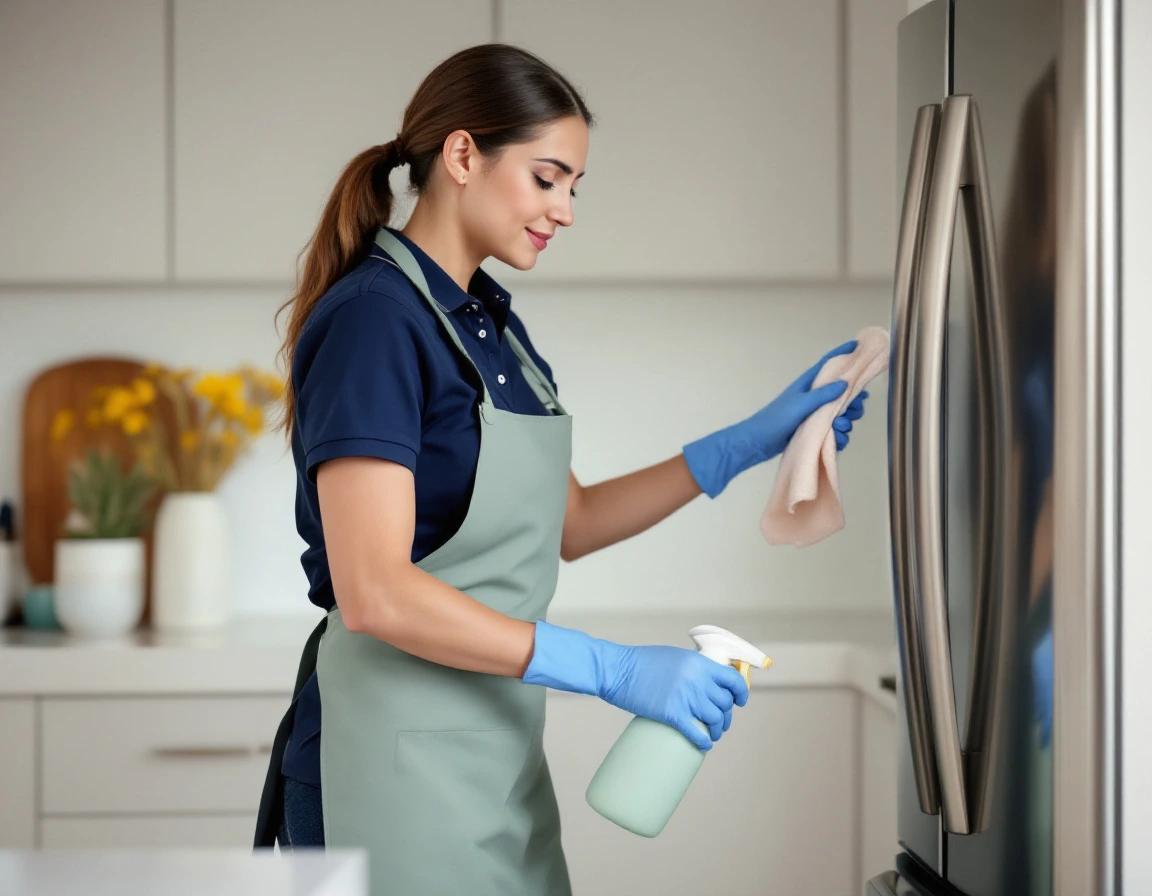
A home cleaned with the right product for every surface
How to use a disinfectant so it actually works
EPA’s six steps for safe and effective disinfectant use are a good routine whenever you do disinfect:
- Check that it is a registered disinfectant. Find the EPA registration number on the label; EPA says it is the only way to accurately identify a product.
- Read the directions on the label before you start.
- Pre-clean. Wash the surface with soap and water if the directions mention pre-cleaning or if it is visibly dirty.
- Follow the contact time. Keep the surface wet for the whole time the label gives.
- Wear gloves and wash your hands afterward.
- Lock it up. Keep lids tightly closed and store products out of reach of children.
Contact time is the step most people skip. The CDC explains that the surface should stay wet for the entire contact time to make sure germs are killed, and EPA notes that the surface should be visibly wet for the entire contact time, which may mean reapplying the product. A quick spray-and-wipe often does not disinfect at all.
Products you should never mix
The CDC is blunt: never mix household bleach, or any disinfectant, with any other cleaners or disinfectants, because it can release vapors that are very dangerous to breathe. Two combinations cause the most accidents at home:
- Bleach and ammonia, which is in some glass and multi-surface cleaners. EPA warns this mix can produce toxic fumes.
- Bleach and any other cleaner or disinfectant, including “natural” products, toilet-bowl cleaners and rust removers.
- Two disinfectants at once “for extra strength”. Use one product, exactly as labeled.
Ventilate while you clean, as the CDC advises, wear gloves when the label calls for them, and keep products in their original containers so the directions travel with them. If you use bleach, the CDC’s bleach guidance gives the dilution and contact time.
If you use bleach: the CDC’s basics
Household bleach is effective and inexpensive, and it is also the product most often misused. The CDC’s bleach guidance is specific:
- Use regular, unscented household bleach, and check that its label gives disinfecting directions.
- Dilute it: the CDC’s solution is 5 tablespoons (1/3 cup) of bleach per gallon of room-temperature water.
- Leave it on the surface for at least 1 minute before removing or wiping.
- Ventilate, and never mix bleach with any other cleaner or disinfectant.
Bleach is the wrong choice on natural stone, many metal and fixture finishes, wood and fabrics. On those surfaces, clean with a product made for the surface and, if you need to disinfect, choose an EPA-registered product whose label approves that surface.
Room by room: clean, sanitize or disinfect?
Kitchen
Clean counters, sinks, appliance fronts and handles at every visit. Food-contact surfaces such as cutting boards and counters where food is prepared follow the label of whatever product you use, and many products tell you to rinse food-contact surfaces with water afterward. Disinfect handles and sink fixtures when someone is sick.
Bathrooms
Toilets, sinks and faucet handles are where disinfecting earns its place in most homes. Clean first, then disinfect the toilet inside and out, the flush lever and the faucet handles, keeping each surface wet for the label’s contact time.
Bedrooms and living areas
Regular cleaning is enough most of the time: dusting, vacuuming and wiping hard surfaces. When someone is sick, add the high-touch points listed below.
Entries and garage doors
Door handles, keypads and stair rails pick up whatever comes in from outside. Clean them often; disinfect them when illness is in the house.
Five common disinfecting mistakes
- Spraying and wiping straight away. The surface has to stay wet for the full contact time; EPA notes this may mean reapplying the product.
- Disinfecting a dirty surface. Clean first, or the product spends itself on the grime.
- Using more product than the label says. More is not stronger; it leaves residue and fumes.
- Using one cloth for the whole house. Separate cloths for kitchens and bathrooms keep germs from traveling between them.
- Disinfecting surfaces the product is not approved for. Many disinfectants dull stone, metal finishes and wood. Read the label’s surface list.
When someone in the home is sick
This is the situation where the CDC recommends disinfecting at home. A practical plan for a few days of illness:
- Clean and then disinfect high-touch surfaces in shared rooms once a day.
- Give the sick person their own towel and, if you can, their own bathroom.
- Use separate cloths for their room and bathroom, and launder them right after.
- Ventilate shared rooms while you clean.
- Wash your hands after cleaning, even if you wore gloves.
Disinfectants and fine finishes
A product that disinfects well is not always safe for the surface under it. Bleach can discolor and pit some metal finishes; acidic products etch marble, limestone and travertine; and harsh products can dull wood finishes and some fixture coatings. Read both the disinfectant label and the care instructions for the surface.
That is why our teams choose products surface by surface: pH-neutral care for natural stone, wood-safe products for floors, and gentle cleaners for brass and matte fixtures. Our guides to granite, marble and quartz and fixture and appliance finishes go into each one.
High-touch surfaces worth extra attention
- Door handles, cabinet pulls and light switches
- Refrigerator, oven and dishwasher handles
- Faucet handles and toilet flush levers
- Remote controls, game controllers and shared tablets (follow the device maker’s instructions)
- Stair rails and the garage-entry door
How we handle it on a cleaning visit
Every standard house cleaning and recurring visit cleans the whole home and disinfects bathrooms, including toilets, inside and out. If someone in the household is sick, or you want high-touch surfaces disinfected throughout, tell us when you book and we plan the time for it. A deep cleaning adds the detail work, such as baseboards, fixtures and appliance interiors, that routine visits only maintain.
Choosing products for a household with children, pets or sensitivities? Our guide to safer cleaning products and the EPA Safer Choice label explains what to look for.
Frequently asked questions
Do I need to disinfect my home every day?
No. The CDC says disinfecting to reduce the spread of disease at home is likely not needed unless someone is sick or at higher risk of getting sick. Regular cleaning with soap, water and the right product for each surface handles everyday germs and dirt.
What is contact time on a disinfectant?
Contact time is how long a disinfectant has to stay on a surface to kill the germs listed on its label. The CDC and EPA both say the surface should stay wet for the entire contact time, which can mean reapplying the product.
Is sanitizing the same as disinfecting?
No. According to the CDC, sanitizing reduces germs to levels public health codes or regulations consider safe, while disinfecting kills most germs on surfaces and objects. Follow the label for whichever product you use.
Can I mix bleach with other cleaners to make them stronger?
No. The CDC says never to mix bleach, or any disinfectant, with other cleaners or disinfectants, because it can release vapors that are very dangerous to breathe. Use one product at a time, exactly as the label directs, with good ventilation.
Does a house cleaning include disinfecting?
Our cleanings disinfect bathrooms, including toilets inside and out, and clean every other surface with products suited to it. If you want high-touch surfaces disinfected throughout the home, tell us when you book.
Sources
Outside pages this page relies on, checked when it was last updated.
- When and How to Clean and Disinfect Your Home · Centers for Disease Control and Prevention, 2025-01-31
- Cleaning and Disinfecting · Centers for Disease Control and Prevention, 2025-06-03
- Cleaning and Disinfecting with Bleach · Centers for Disease Control and Prevention, 2024-04-24
- Six Steps for Safe & Effective Disinfectant Use · U.S. Environmental Protection Agency, 2026-04-01
- Selected EPA-Registered Disinfectants · U.S. Environmental Protection Agency, 2026-08-24
- A Brief Guide to Mold, Moisture and Your Home · U.S. Environmental Protection Agency, 2026-02-18
Request a quote
A home cleaned with the right product for every surface
Tell us about your home, and anyone with health concerns or sensitivities. We reply with a clear price and dates.
What happens next
- 1. Send your name, phone, ZIP and the type of cleaning. It takes under a minute.
- 2. We reply with a clear price and available dates before anything is scheduled.
- 3. Approve the quote and we book your visit. No contracts for recurring service.
Rather talk? Call (682) 841-6708 or text us, Mon–Sat, 8 AM–6 PM.
More cleaning guides
7 min read
How Much Does House Cleaning Cost in Aledo, TX?
The price of a cleaning in Aledo depends on a handful of factors, from bathrooms and square footage to how often you book. Here is what moves the number and how to get an accurate quote.
Read the guide
6 min read
Weekly vs. Biweekly House Cleaning in Aledo
Biweekly suits most Aledo family homes, but weekly is worth it for some households. Here is how to decide, and when monthly makes sense.
Read the guide